What Solar Panels Typically Cost in New York in 2026
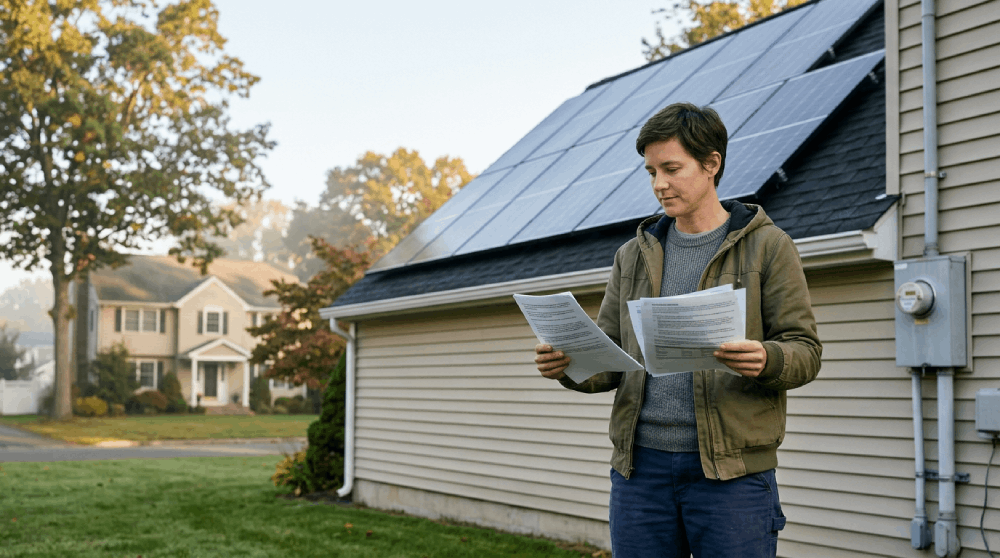
If you’re thinking about installing solar panels in New York in 2026, you’ll notice prices aren’t what they used to be. Incentives, technology upgrades, and growing competition are all impacting what you’ll pay—along with hidden costs you might not expect. But figuring out the real price goes well beyond simply checking equipment quotes, especially with new financial options and local rebates changing the landscape. So, what should you actually budget for your solar switch?
Average Cost of Solar Panel Systems in New York
When considering solar panels for residential properties in New York, it is important to understand the associated installation costs. As of 2026, the average cost for a solar panel system is approximately $34,453 for a 12.44-kilowatt system, with prices ranging from $29,285 to $39,621. This results in an estimated cost of about $2.77 per watt, which is higher than the national average.
The installation costs can vary significantly based on multiple factors, including the type of system selected, the quality of the equipment, and the reputation of local installers.
It is also pertinent to note that after applying relevant incentives and tax credits, the cost for a 6.9-kilowatt system could be reduced to around $16,632.
For those seeking to obtain competitive pricing, platforms such as EnergySage offer the ability to request quotes from various providers, allowing consumers to make informed decisions based on their specific project preferences.
This approach can facilitate a better understanding of the financial investment required for solar panel installation in New York.
Solar Installation Costs by System Size
In 2026, homeowners in New York can choose from various solar system sizes that influence the overall installation costs. For a 4 kW solar system, the average total cost is approximately $11,088, translating to about $3.96 per watt.
Increasing the system size to 5 kW raises the total cost to around $12,810, or $3.66 per watt. A 6 kW system is priced at roughly $14,532, which equates to $3.46 per watt.
For a 7 kW installation, the cost is about $16,268, amounting to $3.32 per watt. Homeowners considering an 8 kW system should anticipate a total cost of around $18,032, corresponding to $3.22 per watt.
It is evident that installation costs per watt generally decrease as the size of the solar system increases. This trend may be attributed to economies of scale, whereby larger systems can leverage lower costs for materials and labor per unit of energy produced.
Key Factors Influencing Solar Panel Pricing
Several key factors influence the pricing of solar panels in New York. The size of the solar system is a significant determinant; larger residences with greater energy demands typically require more panels, which increases both the overall cost and installation expenses.
Additionally, the type of solar panels selected plays a role; for instance, monocrystalline panels, known for their efficiency, usually carry a higher price per watt compared to other options.
Local market dynamics, including the pricing strategies of New York-based solar companies and their respective profit margins, also contribute to variations in costs. Customer reviews, such as those found on platforms like EnergySage, can further impact pricing as they may influence consumer preferences and company reputations.
Moreover, various fees associated with permitting, project specifications, and the methods of installation can affect total expenditure. The process of interconnecting the solar system with the local utility is another factor worthy of consideration, as it can incur additional costs and complexities.
Finally, an individual’s electric consumption and preferences may guide the selection of specific offers and solutions available to them. Understanding these elements can provide clarity when evaluating the financial implications of solar panel installation in New York.
Tax Credits and Incentives Affecting Solar Costs
The initial investment for solar panels can be significant; however, various tax credits and incentives available in New York considerably mitigate this financial burden. The federal tax credit permits homeowners to claim 30% of the installation costs, while the state of New York offers an additional incentive of 25% of the installation costs, capped at $5,000.
Together, these incentives substantially reduce the overall cost of solar energy systems, including associated components such as batteries and heat pumps.
The cost per watt ($/W) for solar installations can differ depending on the company, the quality of the equipment, and the type of kilowatt system selected. It is important for consumers to compare these factors when evaluating offers from different providers.
Additionally, various incentives and rebates available, often outlined in platforms like EnergySage, can further decrease the installation costs. By taking advantage of these financial incentives, property owners not only lower their upfront expenses but also begin to realize savings on their electricity bills, while accessing competitive pricing from local installers.
Calculating Long-Term Savings and Payback Periods
The long-term savings associated with solar panels in New York are contingent on various factors, including initial costs and ongoing reductions in electricity expenses. For an average 6.9-kilowatt solar system, the net investment, after applying the solar tax credit, is approximately $15,939.
It is advisable to consider aspects such as equipment quality, installation costs, and any available incentives when evaluating the total expenditure.
Over a 25-year period, homeowners could potentially avoid utility costs estimated at around $71,770, with average savings being approximately $54,654.
The payback period for solar installations in New York typically falls between 7.4 and 10.63 years, with variations influenced by the type of solar panels selected and the specific offers provided by installers.
A comprehensive assessment of these factors can facilitate a more informed decision regarding the financial implications of solar energy adoption.
Leading Solar Installation Companies in New York
Selecting a solar installation company in New York is a critical decision that influences both the performance of the solar system and the overall investment value. Several local companies, including Palmetto Energy, Infinity Energy, Leviathan Solar Inc., New York State Solar Farm, and New York Power Solutions, have received favorable reviews based on factors such as system reliability, available equipment, and overall installation costs. For those specifically looking at Residential Solar Panels in New York, it's important to compare quotes and reviews to ensure you get the best value for your investment.
The pricing structure for solar installations, typically expressed in dollars per watt ($/W), can vary significantly between different installers, influenced by the type of solar panels used and the specific preferences of the project. It is advisable for prospective customers to utilize platforms like EnergySage, which allows for comparisons of offers and can help identify the most competitive pricing from local installers.
In addition to installation costs, potential savings on electricity bills may be enhanced through various rebates and incentives that are currently available. These financial incentives are especially relevant when considering the addition of home batteries or heat pumps, which can further optimize energy use and savings.
As such, careful evaluation of both installer options and financial incentives is essential for making an informed choice in the solar market.
Comparing Solar Financing and Payment Options
If you are considering the purchase of solar panels in New York, you have several financing options to evaluate, each with its own implications for ownership and long-term financial outcomes.
Homeowners can choose between cash purchases, solar loans, leases, or power purchase agreements (PPAs). Cash purchases involve paying the full amount upfront, which often results in the highest long-term savings due to the absence of financing costs.
Solar loans, typically available through platforms like EnergySage, allow homeowners to finance their systems with little to no down payment. This option can lead to immediate savings on energy bills while enabling ownership of the system over time.
Leases and PPAs generally require lower upfront costs. In a lease arrangement, homeowners pay a fixed monthly amount to use the solar system without owning it outright. Similarly, under a PPA, homeowners pay for the electricity generated by the solar system at a predetermined rate. While these methods reduce initial expenses, they typically yield lower overall savings compared to direct ownership through cash purchases or loans.
Installation costs and equipment quality can differ based on the chosen financing type, local installers, and available incentives.
It is crucial to assess the federal tax credit and any applicable state rebates, as these can significantly reduce the overall investment and improve the payback period, irrespective of the financing avenue selected.
Overall, careful consideration of these options, along with an analysis of your financial situation and long-term energy goals, will be essential in determining the most suitable financing method for solar panel acquisition.
Additional Considerations for New York Homeowners
When considering solar panel installation in New York, it is crucial to evaluate not only financial implications but also local regulations, property characteristics, and maintenance requirements. The costs associated with installation can differ based on factors such as system size in kilowatts, equipment type, and the quality of solar panels.
A thorough examination of quotes from local installers is advisable, and platforms like EnergySage can facilitate this process.
It is important to take advantage of available incentives and rebates, including federal and state tax credits that can significantly mitigate the overall expenditure. Additionally, integrating heat pumps and home batteries into your energy plan may influence both your electricity bills and the overall payback period for your solar investment.
Lastly, reviewing company ratings and comparing prices on a per-watt basis will help in making an informed decision before moving forward with installation. Careful attention to these factors will contribute to a more effective solar power implementation.
Conclusion
If you're considering solar panels in New York, it pays to research your options thoroughly. Costs are trending downward, and incentives can ease the upfront investment. Take time to compare providers, financing plans, and warranties. With improving technology, the long-term savings and environmental benefits are significant. Ultimately, you'll be able to balance initial expenses with future energy savings, making solar a smart choice for homeowners looking to reduce bills and support sustainability.